Pistol on the Wall

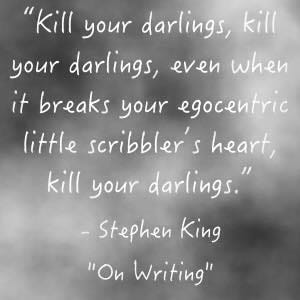
There’s a saying attributed to various people but mostly to Anton Chekhov: “If in the first act you have hung a pistol on the wall, then in the following one it should be fired. Otherwise don’t put it there.” I’m pretty sure I read it as a Chandler quote about putting a gun on the mantelpiece, but the meaning is the same. If you introduce something into a story that is definitely not just set dressing, you should use it.
My problem in this respect is that I have a gun on the mantelpiece and another on the hearth, there’s also a knife tucked into a book shelf, an AK47 resting on top the TV and some grenades hidden behind the sofa cushions. Every time I come up with a bright idea and introduce it to the story, it usually get complicated. Why? Because this is science fiction and the two guns talk, belong to a psychopath, and hate each other. Because the grenades are a conscious, slightly insane hive mind, and also belong to the psychopath, or so he thinks. Because the AK47 is controlled by a genocide surviving conjoined alien entity with plenty of resentments of its own. And the knife? Well it’s just a knife but I’m pretty damned sure one of the nutjobs in the room will use it.
*sigh*
No matter. I am in ‘just write it Neal’ mode and I can maybe use the knife myself later to excise the proliferating plot threads. I’ll then place them in my BitsSF file and at some later date turn each into a short story.
To work.

Time for Another Video Clip

Here’s an old one from 2011. Time now for another one so, if you have questions you would like to see me answering in a video clip please post them below.

One question thus far from FB (I must keep track so I’ll put them here):

Jessie Grey Have you ever considered a Polity based work that is more of a survival, exploration epic or disaster based? I love the wars, don’t get me wrong

Flashes of Sunshine

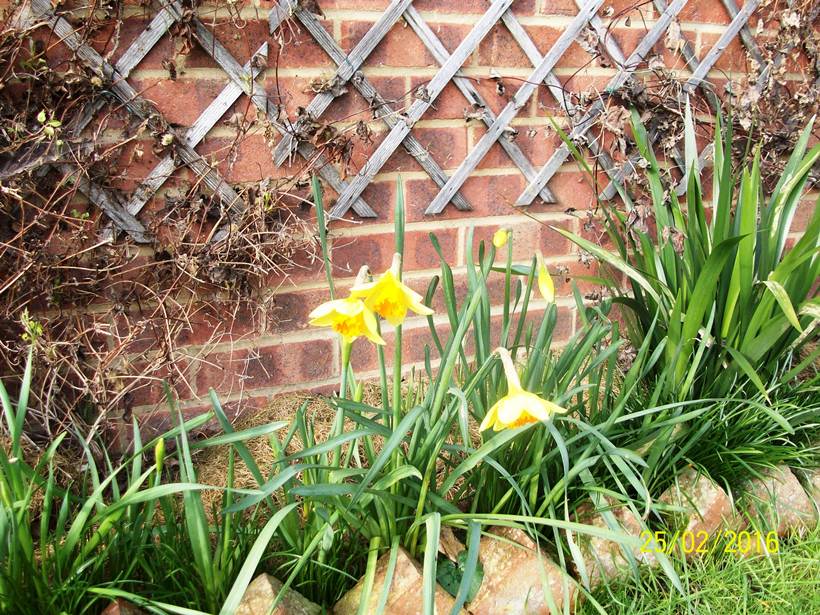
Now moving steadily away from the previous posts, since I’ve become a bit of a bore on the subject. Really REALLY time to start cheering up. I mean, I’m not a great lover of the Winter but I seem to have completely lost this one. Snow drops have been out for a few weeks and now there are daffodils open beside my front door. I can smell the Spring. I can feel the pace of life starting to ramp up; the world thawing out.

So anyway, yesterday I actually managed to sit down and do some writing. I didn’t expect much of myself . In fact I expected to stare at the screen for a while, scratch my balls then wander off and make a cup of tea. But despite everything words started appearing on the screen and ideas started appearing in my skull. For a while there I was actually enjoying myself. This, in essence, is what I have to recapture. I know my job well enough now that I can sit down and bang out the story and write copious amounts. However, if that is a joyless chore it is reflected in the writing.
Recapture joy.
This morning I went for a short walk. My usual route here is a 7-mile circuit and, having checked Google Earth, I know that none of the circuits I can do here are less than that. I’ve had to bite the bullet and do a walk where I retrace my steps. I don’t like doing that but, the long walk leaves me a bit knackered at present, while a short walk of under an hour energizes me. While walking back down Rectory Lane, trying not to fall on my ass (the lane has no ditches and the fields either side are high, so the lane is always wet and with present temperatures is mostly a sheet of ice) my mind wandered to my present obsessions. With mindfulness having made me more aware of what happens between my ears, I stopped that train of thought and concentrated on the present book.
Little flashes of sunshine.

For a while I thought about targets, writing 2,000 words a day, completing the book, how to progress the plot to that end… But you know, all of that is something that takes care of itself if I am enjoying what I am doing. When I wrote The Skinner I wasn’t thinking about targets or endings, I was just having a great time. So once I put aside that shit I started to think on other things: an alien entity in the Prador Kingdom with some seriously dangerous Polity hardware, the king of the prador and his steady transformation into what readers here will have seen in Orbus. Deeper stuff too related to my past – PAST! – obsession. How the maladies of the mind can often be a matter of choice; how maybe Jay Hoop would not have turned into the Skinner if he had not been such a sick puppy beforehand.

So today. Concentration elsewhere. I will shortly make myself enough bacon sandwiches to harden the arteries of the nearest ‘health professional’. I will then just sit here at my computer and write, and think, and write some more. No targets, no endings, just space opera and weird biology. Maybe the prador will be deploying some new super warship to counter the alien threat, maybe the king will see some way of escaping his destiny, maybe Orlandine will take control of some Jain soldiers, maybe a Jain super-soldier will bathe in molten lead…

Have a nice day. I aim to.  

Don't Panic!

Okay, the prior post on here was not my last on the subject of grief, depression, anxiety and panic attacks because I really need to deliver a bit of a warning. If you have read the previous posts you will know that I had delayed or complex grief. To process this I began looking at photographs I had not dared to look at in two years. The effect was immediate: crying, real grief, but my depression went and my anxiety dropped.
However, as I continued to look at these photographs my emotions were all over the place. I found my anxiety returning on and off and I was far too raw. Visiting the in-laws which was at first a relief began to leave me anxious again. I would have an overreaction to the stupidest things. I bad comment on FB could put me on the floor. I in fact felt, after the initial relief, that I was getting worse again. I felt tired all the time and often icy cold.
Last Thursday I woke to panic attacks, but I was so tired I stayed in bed. They continued and finally forced me out of bed. I had a crappy morning then began to come up in the afternoon. I decided that next time I had attacks like that while in bed I would get up immediately. On Friday that happened, but thereafter I felt shit most of the day. In the afternoon I got my hands on an Ipod dock. I had read that panic attacks are a result of ‘insufficient mourning’ and in the evening I did some more. I had Caroline’s Ipod with all her music on it and I set it playing. The first record to play was Skyfall, which played at her committal. Thereafter came records I had been hearing for years prior to 2 years ago. They wiped me out. It was as bad as the first time I looked at the photographs – records a year ago I walked out of a bar to avoid hearing. However, after that emotional storm I slept okay. Exhausted. And woke the next day without panics.

Saturday I was so-so. In the evening I listened to the music again and again it screwed me. That night when I went to bed I immediately started having panic attacks. Every time I was on the edge of dozing off I would have one. I slept maybe half an hour. The next morning I felt awful – the attacks continuing into the day. I went to eat at the in-laws and only managed half my dinner before I had to leave. At about 4.30 in the afternoon I was desperate enough to call 111 for help. A scattering of phone calls across 7 hours and thereafter they forgot about me until 2.00 in the morning, by which time I was in no condition to drive to a ‘night surgery’.
However, meanwhile I trolled the Internet and found that codeine phosphate can help. I had some left over from 2 years ago (for Caroline) and started taking about 30mg every 3 hours, along with kava-kava, Kalms and 5-htp. These kept me sane until the morning when I phoned the doctor’s. I got an ‘emergency’ appointment at 2.30PM. He gave me Zopiclone sleeping pills one of which knocked me out on the sofa for 5 hours. Another one at night gave me another 5 hours and only some mild panic in the morning. Today I have been steadily recovering, but how long this will last I don’t know. The doctor only gave me 7 pills.
To sum up: yes, you must process your grief, but I suspect that, as usual, I have been trying to do too much too quickly. I guess it is comparable to exercise – if you don’t take rest days the exercise doesn’t do you much good. With this ‘processing’ I guess that yes you must grieve, but then give it a rest while your brain deals with it. This is confirmed in a CBT booklet I was given – 4-5 days of ‘exposure’ per week. I did notice over this hellish weekend that at every low point I had, alternately, ‘Broken Strings’ or ‘Skyfall’ playing in my head – both were played at the committal.     

Covers

When I first saw Steve Rawlings’ cover for Gridlinked, I have to admit to a degree of puzzlement and disappointment, since for so long I had been in love with old lurid SFF, covers like those produced by Foss, or like the thoroughly lurid ones found on one of Edgar Rice Burroughs’ Mars books, maybe a green multi-armed Tars Tarkas weilding two or three axes or swords. However, it then being the case that, ‘this is your cover’and ‘you like it don’t you?’ I kept my mouth shut and, by the time the cover for The Skinner appeared with a similar design but in wonderful shades of Mediterranean blue, I was hooked.

On the fifth book, Brass Man, it seemed the time for a change had come as I was now ‘a name’, that name needing to be larger on a plainer background. So the hardback came out with a design similar to that of the previous four, whilst the paperback got the makeover. It was pretty cool – the brass man himself reflected in a lizard eye – and many of the ensuing covers have been as good. Yet how good was driven home to me as I became thoroughly aware of just how bad covers could be. For example the cartoonish American cover of The Skinner was a thorough disappointment, and the curious German habit of recycling covers was puzzling and annoying – it took me some while to work out what was going on with the Lubbe cover for Gridlinked, until I discovered they had reused the one for Arthur C Clarke’s 2010.

As the new design of cover progressed we decided on a main and thoroughly relevant picture on the front, along with one of my inevitable monsters displayed on the back. However, sometimes the monster turned out better than the main picture and in two cases was swapped around. The decidedly odd gabbleduck of The Gabble exchanged places with a somewhat difficult to identify piece of technology. But the Prador Moon revision has to be the best: the generic rocketship being relegated and the Prador itself moved to the front. Some readers have pointed out that the creature doesn’t quite measure up to those described in the book, however, a crab carapace sprouting all sorts of cybernetics along with a couple of Gatling cannons, is quite sufficient to float my boat.

In all, my favourite Macmillan covers are those for Hilldiggers, Prador Moon, Brass Man and Shadow of the Scorpion. But there have been many delights elsewhere: the Japanese cover of Cowl, the American Brass Man and the superb Stephan Martiniere cover for the first French version of The Skinner. And now the new German covers, at last.

Galaxy Blog Post

So, Emily Wu, the Product Manager for Macmillan books in Australia, told me that they supply books to a good specialist science fiction/fantasy bookshop in Sydney called Galaxy Books, who asked whether I might be interested in providing a guest blog for their website. I’ve never done a guest blog before but, being an SF writer and avid SF reader, how could I possibly refuse a request from someone with a name like that?

Y’know, I loved Ringworld, and Ringworld Engineers by Larry Niven and maybe she’s related to Louis Wu? Maybe she’ll send a Pak Protector after me if I don’t do this blog. Maybe she is a Pak Protector!

I emailed the store manager Mark Timmony about this and he replied with ‘Basically I have been letting author’s run wild talking about the world(s) their latest title is set in and the themes they wanted to/were exploring that are not immediately obvious from the blurb’. Well, a chance for me to waffle on about one of my books… It’s a no-brainer really.

Okay, here’s one of the selection of blurbs I wrote up for The Technician:

Twenty years after the fall of the Theocracy, a religious policeman, Jeremiah Tombs, the only living survivor of a hooder attack, has escaped his sanatorium. The scorpion drone Amistad lets him run, for though Polity technology could cure him, the AIs are reluctant to meddle since it was the near mythical Technician that attacked him, and it did something to his mind that even they don’t understand.

The amphidapt Chanter pursues the Technician in his mudmarine, trying to understand the grotesque sculptures of bones the creature makes with its victim’s remains, trying to understand its art. He is recruited by Amistad, along with ex-rebel Commander Lief Grant, and a lethal black AI everyone thought was dead.

Tombs could possess information about the racial suicide of the Atheter, but his self-destructive madness needs to be cured by confrontation with the reality about him, a reality in which the religion-hating Tidy Squad wants him dead. And meanwhile, in deep space, the mechanism the Atheter used to reduce themselves to animals, stirs from slumber and begins to power-up its weapons.

***

Right, time to heat up the waffle iron.

The planet Masada, the planet where this is set, first puts in an appearance in the second book in the five-book Cormac series: 1. Gridlinked, 2. The Line of Polity, 3. Brass Man, 4. Polity Agent, 5. Line War. There was, quite simply, one reason I wanted to return there –gabbleducks – and, initially, that was the title of the book I was writing. These creatures are the deliberately devolved descendents of the Ather mentioned above, and they have grown in the telling, sparking off three short stories Softly Spoke the Gabbleduck, The Gabble & Alien Archaeology, which appeared in Asimov’s Magazine, some ‘Year’s Best’ collections and now finally reside in a collection with the overall title The Gabble. I wanted to write more about them, expand on them, but it didn’t quite work out that way.

First let’s take a look at Neal Asher’s desk and the preparations he’s making for his next book. Post-it notes on the pin board? No, just some Jon Sullivan covers, the Greek alphabet and last week’s shopping list. Rough synopsis on the screen. No, just a ranty blog about smoking bans or political correctness. Some ideas jotted down on that pad? No, they’re from the last book. Research notes? Get out of here, haven’t you heard of Google?

Actually, I did do a little preparation for The Technician by reading The Line of Polity and Alien Archaeology to remind myself of some cogent points. However, when I write a book I embark on the same voyage of discovery as you guys when you pick up a book and open it, except my voyage starts at a blank page.

With this book I started by writing about a toadman called Chanter and his interest in the grotesque art of a hooder called the Technician and, when on my voyage I found out that the Technician was a two-million-year-old biomech war machine, that kinda hooked my interest.

Next I wrote about Jeremiah Tombs, ensconced in a sanatorium for over twenty years, mad as a box of frogs after having had a very nasty encounter with the Technician, and it having done something quite odd to his mind. I wanted to know exactly what that hooder did to him, and the only way to find out was to write my way there. Along the way it seemed the right thing to do to drop in the war drone Amistad (The Shadow of the Scorpion), a black AI called Penny Royal (Alien Archaeology) and some inevitable interference from that alien entity called Dragon, who suicided on Masada, and rose again as an entire race. But even with all these, the threat levels weren’t quite high enough and the chances of planetary extinction remained low, so it was necessary to spice the mix with a billion tonne ancient genocidal mechanism.

Keep it simple, I say.

Of course there are gabbleducks here, but they don’t feature so much as the Technician itself, hence the change of title. I guess that leaves things open for me to do a book called Gabbleducks sometime in the future.

Now, to conclude, because I’m running out of steam and don’t know how to waffle on without giving too much away, I have to wonder if you are any the wiser for reading this? Probably not, but I hope you’re intrigued…
Enough.

This will be my last blog or post to FB about grief, depression, anxiety and panic attacks. I know that following my journey through this has been helpful for many, but for reasons I will shortly explain, this has to stop. I thank all those fans and others who have given and offered support. You’re good people! And such good people need to be rewarded with big fat sprawling space operas!
Three years ago I was perfectly happy and satisfied with my life. The evidence for this to others would be the Transformation trilogy. I had written 3 books to first draft before I even needed to deliver the first book. I would wake up in the morning feeling enthusiastic about life, get out of bed ready to DO stuff! Yeah, I would play about on the internet, but still I would do my 2,000 words and then get on and enjoy other things. In Crete I would work, then swim, then drink chilled wine in the sunshine. Everything was rosy.

Two years and eight months ago my wife, lover, friend and support, found she was bleeding where she shouldn’t since she had been through the menopause. Over the ensuing 7 months a worry turned into a nightmare that just got worse and worse. Every step of the way hopes were killed. Fibroids, we thought. No, a mass of tumours in one ovary the size of a baby’s head. We tried the Greek hospital system but after the stress of that came back to England. Here she was operated on, all her female plumbing removed. It was bowel cancer that had spread. Stage Four. She started to recover from that first operation but then began vomiting. Back in hospital they operated again – the bowel cancer had revealed itself at its source blocking her intestine. They did a bowel bypass. It failed. She had a choice then: another operation that would likely result in an ileostomy bag, or death from peritonitis in a couple of weeks. I never realised then that it really was a choice. She ended up with an ileostomy bag but never really recovered. Another blockage resulted in her going back into hospital to be fed through the arm. When it happened again at home she chose to stay at home. District nurses sprang into action and for them I have nothing but praise. Caroline then stopped eating and drinking. Nothing would stay down anyway.
On the evening of the 24th January 2014 she was uncomfortable again. She liked her knees up sometimes, and sometimes her legs down flat. I moved them for her but nothing would work. I could see the mottling in the lower parts of them which I suspected was clotting blood. I suggested she might be more comfortable on her side. She started to move, then said, ‘Oh no!’ and tried to fling herself from something. She collapsed on the bed. Eyes wide open. Nothing in them.
I grieved and I thought that as the crying stopped I was getting over it. I also walked ridiculous amounts – thousands of miles over the ensuing two years. I lost interest in most other things. Food didn’t interest me, TV, film, reading and writing. Alcohol steadily ceased to give me any pleasure – the opposite in fact. I started to become scared of it. Life was just a purposeless march not to feel miserable. What I did not realise until just recently was that it had all been too painful so I had suppressed it. This last year it started to come back at me, most likely instigated by the pressure of a new relationship. I started to get really anxious, to suffer periods of depression, to suffer panic attacks. I could only seem to think negatively and sometimes this was so bad I thought I was going crazy. A couple of times I had what seemed like psychotic breaks. Perhaps they were.
While in Crete I tried SSRIs (antidepressants) but immediately did not like the side effects. Many will understand what I mean when I say they are not great relationship-wise. I then tried meditation and this eased things a little. Back in England I saw a hypnotherapist, which helped a little too. She told me to get Rob Kelly’s book ‘Thrive’, which also helped – positive thinking, positive visualizations, that sort of stuff. I began working my way through an 8-week mindfulness course. All these helped but still I was anxious most of the time, having panic attacks, and then I had a 6-day depression during which I simply did not want to live. I lost 9lbs in weight. I had more or less decided that I had no choice – I would have to take the SSRIs. Then I found out about ‘delayed grief’ and ‘complicated grief’.
Everything fitted, all my symptoms, all the circumstances, all the running away I had done with the ridiculous amounts of exercise, the way I hurriedly rid myself of any reminders of Caroline. The only answer was to grieve. When I started looking at photographs I had been unable to look at for two years I fell apart, crying uncontrollably sometimes. It was awful but, immediately after that the feeling, the tendency like a lurking monster, of depression, was gone, and my anxiety diminished. I have been looking at those photos and crying for 3 weeks now.
But the negative thinking, though it had diminished a lot, was still there. I suspect it is something I established in myself while Caroline was dying and in the ensuing two years. I had realised from all the self-help books that I must tackle it, and I had been, but it’s difficult to do that when you’re at the bottom of a pit. But now, with perfect timing, along comes a book by a guy called Richard Carlson ‘Stop Thinking, Start Living’.

Everything that had been inchoate in my mind about depression and anxiety have solidified on reading it. The answer, as always, is simple but difficult to apply: stop it, because it is your own thinking that generates these conditions. You cannot think your way out of depression and anxiety. In other books they say ‘think positive’. But positive thoughts are no more valid than negative ones. They say you can’t stop thinking negatively but must displace that with the positive – using the old adage ‘don’t think about the elephant’. But it is not true. If you turn that hypervigilance, which previously you had used to always look for the bad, towards your own thoughts, you can see a negative thought cycle starting and simply stop it by thinking of nothing at all. Just shut it down, and eventually something else will come. Sometimes it will be bad and you have to shut it down again, and again and again. Carlson’s contention is that really, at our heart, we are not negative, depressed, unhappy – all of that shit is learned behaviour. It makes sense. Look at a child. Anyway, it’s work. It’s work I am doing and its effect is good. Maybe I would not have succeeded if I had tried this while still carrying a sackload of grief. I don’t know. All I know is that it is working now.
And finally, here’s why this will be my last post on this subject. Carlson has a low opinion of psychoanalysis. You do not solve the problems of depression and anxiety by focusing on them and examining them and their possible causes in more detail. You just strengthen them by doing that. This is why people end up regularly visiting a psychiatrist year after year after year. Stop strengthening those mental pathways. Well I am stopping now. All of this mental shit is no longer going to be the central fact of my life. I am not going to keep writing about it and talking about it.

This ends now.

Pre-final Update on Misery.

Here’s some stuff to date because I am finishing with this. I will explain why in my next blog post…
Feb 11th
Mmm, a problem in dealing with grief, or depression, or anxiety, or any similar malady, is thinking too much about being miserable. Constantly having this on your mind drags you down. Been reading some on this sort of thing. Is it any wonder that some people spend so many years in analysis when they constantly spend time deconstructing their miseries?
I’m on an upswing tonight. I have to focus elsewhere, occupy my mind with other things beside being sad and miserable. This has been difficult for some days because grieving is so energy sapping. I must move. Walk tomorrow, and work. I hope.
Feb 12th
Ahhhh! Woke up without panics and feeling almost as good as I felt last night. I will run with this. Heart radio on. No overthinking. Walk a little later. Just keep moving. Maybe some writing, maybe some reading. Whatever feels good.

Over the last few months I’ve read through many self-help books. Many of these I’ve abandoned before finishing. The stuff in them ranged from ‘no shit Sherlock’ to overcomplicated psychobabble. I’ve read stuff on the internet too, tried hypnosis, all sorts of techniques for positivity, meditation and on. I’ve grasped what my problems have been: delayed grief resulting in anxiety, depression and panic attacks, the whole either compounded by or causing negative thinking. And now, as I get a handle on all that, with perfect timing, along comes Richard Carlson’s book ‘Stop Thinking, Start Living’. I’ve nearly finished it now and I know I will read it again and again. Seriously recommended.

Super Trooper

I’ve just re-read Robert A. Heinlein’s Starship Troopers – a book I originally read when a teenager. What little I remembered of reading the book then, had since been swamped by the lurid images from Paul Verhoeven’s silly but enjoyable film. I probably would not have read it again but for two circumstances: firstly my mother happened to bring home a copy from the charity shop in which she works, and secondly, the strident claims that Heinlein is fascist/right-wing/libertarian from members of the British SF establishment, piqued my interest, for it is often the books recommended by the same critics and self-styled academics that bore me into a coma.

My second reading of this book gave me what I’ll describe as the Dad’s Army effect. When I watched that series as a child, I laughed along with the slapstick and enjoyed it on that level. Watching it later as an adult, I began to appreciate the adult humour. Starship Troopers can appeal to the SF-with-boy’s-toys oriented adolescent just as much as to an adult with the same orientation. But reading ideas of how human rights and privileges should be earned and should be equally balanced by responsibilities, I began to see why Heinlein is disliked by so many, then I hit chapter eight.

There are those who consider his work ironic – satire – when he is describing his future society, but that’s wishful thinking on the part of people who cannot accept that someone who produces such lucid enjoyable work does not buy into their political beliefs. His satire is in fact directed against the society of his time, and of our time, of which he is unstinting in his scorn. Not accepting the cop-out that he didn’t really mean it, it would seem then that Heinlein advocates corporal and capital punishment “…they(wrongly) assumed Man has a moral instinct.”  his narrator tells us, this, after detailing how the delinquents of the twentieth century were never really deterred from going on to become full-time criminals. How they never, in the puppy-training analogy he uses, had their noses rubbed in it.

He comments on a death sentence carried out on someone who kidnapped and murdered a little girl: Well, if there was no way to keep it from happening once, there was only one sure way to keep it from happening twice. Which we used.  The old liberal platitude has it that the death penalty is no deterrent to murder, which is like saying that hitting a paving slab at 125 miles an hour is no deterrent to jumping off the Eiffel Tower. Well, you’ll only do it once. Of course such arguments are too simplistic for the politically correct and ‘socially aware’, but he has a pop at them as well on the subject of corporal punishment: “…the time-tested method of instilling social virtue and respect for law in the minds of the young did not appeal to a pre-scientific pseudo-professional class who called themselves ‘social workers’ or sometimes ‘child psychologists’. It was too simple for them, apparently, since anyone could do it using the patience and firmness needed in training a puppy. I have sometimes wondered if they cherished a vested interest in disorder…”

Such simplicity is not relished by those who studied psychology, sociology et al at the universities where they also received their political indoctrination. (It’s sad that so many enter the SF world via the same route and consider themselves radical, when really they’re only joining the establishment.) Such people have not so much a vested interest in disorder, but in over-complication, because that way they can wrest control from poor normal plebs. “You must not smack your child, bring him to the child psychologist and if that doesn’t work, we’ll dose him up with Ritalin, then during his ensuing life this severely screwed-up human being can keep any number of counsellors, psychologists, social workers & sociologists in employment.”

Reading about Heinlein’s work I discover that he did not write ‘literature’ and that his later works were weighed down with didactic right-wing/libertarian tracts. Of course, had those tracts been left-wing/liberal, he would have been on a higher pedestal in Britain than the one he presently occupies – his work branded as serious literature containing much important social commentary. You gotta laugh.

Starship Troopers was first published forty-six years ago. Read chapter eight if you cannot be bothered with the whole book. In the political zeitgeist of today’s Britain Heinlein is not accepted as a visionary, but that will come after the lunatics presently in control of our society have finished shovelling their excrement at the fan, in the time when we have to clean up the mess.

A is for Alien

A is for Alien, not because it was the best film of the series, but because it was the first. Here at last SF film lost the rubber head syndrome and on screen we saw something difficult to laugh at. Not only that, space lost its 2001 polish, the Nostromo bore more of a resemblance to a working JCB than many of the shiny toys we’d grown used to, and you could just about smell the hydraulic oil, and the BO.

B is for Blade Runner, because it has to be.

C is for Cicada Scream, the title I’ve chosen for a book I’ll one day write about Crete. On hot still days whilst driving down from Papagianades to Magrigialos the sound these insects make blends into one long loud scream. It sounds like madness which, considering our experiences here, seems to perfectly sum up this place.

D is for Dexter, the TV Dexter and not the books. I love the series, can watch it again and again and, I have to say, the character appeals to my inner psycho. Yeah, sometimes I would like to be him, carving up the scum of this world who laugh at our soft police and wimpish justice system. The only problem with me taking on this role as that I wouldn’t be so stringent in my selection process as him. At least, I wish he really existed.

E is for Essex. Well, you can’t be more of an Essex boy than being born in Billericay and I have to support this county that comes in for so much stick from elsewhere in Britain. White stilettos? Yes, I’ve seen them, usually on some slightly inebriated female lying on the pavement of some inner city much further north. Thick Essex girls? If you say so, though oddly most of them seem to work for a living.  Rich builder boys and scrap merchants, wealthy oiks with no taste? Very true … Essex is a county where the class system has been badly injured.

F is for Frappe which is now, amidst those drinks with no alcohol in them, my favourite. It took me a while to get used to this drink because I had to lose the idea that I was drinking a coffee that I’d left out too long and really needed to put in the microwave. I also have to add that Greeks drinking hot small cups of bitter coffee is an impression that’s a generation out of date. They drink frappes, lots of them.

G is for Germany for a couple of reasons. We took a short break in Berlin some years ago and there found some of the most polite and helpful strangers we’d ever met. Also, Baste Lubbe, my German publisher, has bought every book I’ve ever written, some of them even before they were anything more than an idea, and maybe a title.

H is for Hornet. My stuff about hornets being intelligent you might think a product of all my previous SF reading, and I guess the hivemind aspect does. But let me tell you a story. Before I could earn money from writing I once repointed a three-storey Victorian house. Whilst I was poised precariously atop two roped-together scaffold towers I glanced to one side and thought I saw a helicopter in the distance. It took me a moment to process that it was actually a large hornet rapidly approaching. I had nowhere to run. The thing flew over, hovered over my bucket of mortar, dipping to inspect it. It then flew up to inspect the work I was doing on the wall. At this point I did something akin to abseiling without a rope, finally diving in through a window my workmate was repairing. The damned thing followed us, not angrily. It just followed. We had to leave that room and close the door between, checking every now and again until the thing went away. It did, but then returned many more times that day. The thing that stuck with me was its seeming intelligence – no bumbling about like a wasp or a bee. The hornet hivemind germinated then.

I is for Iain M Banks with his talking guns, crazy AIs, and spaceships so large just a glimpse of one might crash a civilization. His books were the first I ever bought new, having acquired my SF fixes from a second-hand book shop until I read a story of his in Interzone. His books weren’t in that bookshop, so I bought Consider Phlebas. I’m very glad I did.

J is for Jacaranda. Damn, the name has been in my head for years and I’ve been seeing those beautiful blue flowering trees for years too. Only in the last month have I managed to connect the two. Well, I’ve always said that when I feel I’ve got nothing to learn it’s time hang up my keyboard. It’s certainly not that time yet.

K is for Karate. In days of yore it made me the fittest I’d ever been and is the only sport that ever appealed to me. Because I didn’t take all the tests I should have done, I only reached the level of green belt, about which I’ve over-used a joke concerning people being unable to build houses on me. I once fought in a competition at Crystal Palace, left in a state of euphoria until the bruises started to come up on my ribs and I discovered I’d broken my toe.

L is for Lachrymal. I once read an old dictionary from cover to cover and this was one of the words I found there. It’s a noun and one you won’t find in a more modern dictionary. A lachrymal is a small vessel made to contain the tears of the bereaved, and is buried with the dead. I used it quite a lot in a fantasy trilogy still awaiting on my hard drive – this was before I lost the neophyte writer’s attraction to baffling the reader with an obscure vocabulary.

M is for Mundon, where I spent a quarter century of my life

N is for Nautilus, no, not Verne’s submarine, but the creature it was named after. Like someone else writing here, I too have an attraction to and an admiration of molluscs. The damned things are fascinating. Did you know that some snails manufacture a barbed calcite spear inside themselves to harpoon their mate? The nautilus, as well as being an odd creature of this nature, is also quite beautiful and strange, which is probably why Sniper ended up in a drone shell of that shape.

O is for Occam’s Razor, which is absolutely right, and a great name for a spaceship.

P is for Parasite. I’ve always been fascinated by biology (all sciences really) and when, maybe fifteen years ago, a vet acquaintance offered to loan me a book on helminthology (the study of parasitic worms) I accepted. So, the brain worm, whilst in that stage of its life cycle when it occupies an ant, will make the ant climb to the top of a stalk of grass and cling there, awaiting a grazing sheep, which it the worm’s next host. Another parasite, occupying a snail, will make the snail grow a thicker shell to thus offer more protection to both parasite and snail, but kill the snail’s ability to reproduce. Well, all of this resulted in numerous short stories. It’s also to blame for the Spatterjay leech.

Q is for Quantum because in science fiction we don’t use abracadabra.

R is for Raki. Ouzo is the drink usually associated with Greece but raki is the one you should associate with Crete. Every village here has numerous stills, kazanis, and during October and November the roads are occupied by pick-up trucks carting about crates of grapes and large brown plastic barrels. I’m told that like grappa, raki is made from the leavings from a wine press, but I’ve yet to see that. At the kazani right next to our house they mince up grapes in barrel, allow the mix to ferment for a few weeks, then stick this lot straight into a still. Nothing quite like raki warm from the still, drunk in good company, to wash down barbecued pork, garlic bread, raw cabbage with salt and lemon juice, pomegranites. And the stuff is cheap here. Three Euros will buy you a litre, if someone hasn’t already given you gifts of more of the stuff than you can drink. It’ll be the death of me.

S is for Scorpion. I was writing Scorpion Memory during our first time on Crete. When I finished it, Night Shade Books felt the title too obscure and wanted it changed to Shadow of the Scorpion. By the time Macmillan took it on I’d already shared a house with the creatures, and had the pleasant experience of hearing one thud down on my pillow beside my face. The word seems almost precognitive, but it’s just coincidence.

T is for Terminator because the Golem owe him a lot.

U is for Unseen University where wizards eat and drink too much and smoke roll-ups, so are very familiar to me. It’s a place sitting at the centre of Ankh Morpork, which seems to sit at the centre of Discworld, at least in my mind. Thank you Terry Pratchett for endless hours of excellent reading, for the wisdom, and for slyly being ‘guilty of literature’. Collect your accolades and laugh.

V is for Volkhavaar by Tanith Lee. Never read a bad one from her but this one is my favourite. Here worship creates the god, long before Pratchett’s Small gods. I feel she single-handedly created the gothic fantasy genre, and few have written it so well.

W is for Waylander, one of David Gemmel’s many heroes. Here’s another writer all of whose books I’ve enjoyed. Being unashamed to entertain seems a very good survival trait in the publishing world, and a path I always seek to follow.

X is a bastard. Open a dictionary and words beginning with X only occupy one page. I won’t go for X-files, because I didn’t really enjoy that silliness, and I’d rather hit myself in the face with a frozen kipper than watch The X-factor. How about xenophobia – the stick that xenophobes use to beat others with.

Y is for Yamas. Cheers!

Z is for Zelazny, for books I read until they were falling apart and had to put away because I had nearly memorized them.