No SF at the BBC

Well I know that – I tried to watch Outcasts.

Stephen Hunt is getting hacked off with the BBC attitude to genre fiction as we can see in his blog post here. There’s also this article at the Guardian. I’m not sure I entirely agree. The Guardian seems more serious about genre fiction than just about any other newspaper, has published the article I’ve just pointed out, and it’s also joined at the hip to the BBC. What do you think? Maybe it’s only mentioned in the elitist spirit of ‘inclusiveness’ of the sneering intellectual pseud?

The good news is that the BBC has recently woken up to the decline of the printed word as an art form, and has belatedly decided to do something about it. The bad news is, shortly after they belatedly spotted all the high street bookshops going bust, they sent in the Sloanes with Purdey shotguns to lecture us on animal welfare.

Recently we’ve had Faulks on Fiction, where one of the bishops of the contemporary fiction high church, Martin Amis, laughed, ‘People ask me if I ever thought of writing a children’s book. I say, “If I had a serious brain injury I might well write a children’s book.”’

Then we were offered World Book Night and a whole evening of BBC book coverage where the contemporary fiction team was trotted out onto the grass to kick the ball about – solely between themselves, of course.

The highlight of this was presenter Susan Perkins in the ironically entitled The Books We Really Read: a Culture Show Special making it sneeringly clear that she never normally reads any of our lowbrow genre tripe (although she might, you know, give it a whirl now, just for the sake of World Book Night). Fiction has to be painful, a little like school, she explained, before gushing all over some bemused beauty salon clients that her favourite must-read was Dostoevsky, who is all, like, really dark and stuff.

Fantasy was not mentioned once during the Perkins farce, fantasy, the very mother root of literature, JRR Tolkien and Terry Pratchett and Neil Gaiman and JK Rowling and Joe Abercrombie and China Miéville and Michael Moorcock all stuffed inside CS Lewis’s wardrobe, the better not to be seen.

Not a single work of science fiction was brought up, so farewell then the brave new worlds of HG Wells, John Wyndham, George Orwell, Iain M Banks, Brian Aldiss, Sir Arthur C Clarke, Aldous Huxley, JD Ballard, Alastair Reynolds, Peter F. Hamilton and Stephen Baxter.

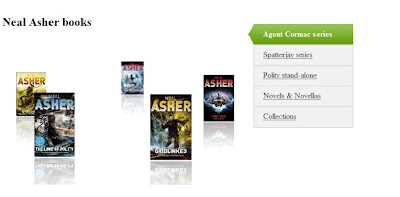
Translation Rights for Orbus.

The translator of my books in the Czecho Republic, Petr Kotrle, was rather gloomy about the publishing situation there since the Czech government has now decided to charge 20% VAT on books – like all governments their solution to money problems is more tax. This is rather like a leech attached to a host almost drained of blood deciding that the best thing to do now is suck harder.

Anyway it’s nice to hear that the translation rights for Orbus have been bought by the Czech publisher Polaris. I’m hoping that Polaris buying Orbus is a good sign…

Now, I really must tot up which of my books are translated where. I’m starting to lose track.

Editing The Parasite

It’s an odd experience for me to again read The Parasite while I’m editing it. So much has changed. My English is a lot smoother now and I know how to write sentences that are longer than ten words. I more clearly see the logical connections in the flow of the plot and my paragraphs are … tidier. But beyond the English other differences strike me.

Here was a novella I wrote when I simply did not think to question the idea, often promulgated, that the real bad guys are from the corporation or the company. Think about films like Alien and the recent Smurf movie, think about other films and TV you’ve seen and books you’ve read. When the be-suited killers start turning up they are usually working to cover up the dirty doings of some evil capitalists.

This was also written at a time when I unquestioningly accepted global warming as a threat, hence we have ‘Maldon Island’ (presently an inland town), a one-metre sea-level rise and a requirement for massive sea-level defences. I’ve changed all that now, so if you wish to read it you’ll have to get hold of the old Tanjen copy depicted.

I also bought into the idea of ‘good’ multinational organisations rather than such working for their own advantage, hence the good guys here working for World Health. When I wrote this I was teetering on the edge of but had not yet fallen into the pit of cynical despond. This sort of reminds me that when I was 16 and working I thought ‘I’m a grown up now’, but then about ten years later I looked back on that callow youth and chuckled at his naivety, then ten years after that I looked back at that ‘boy’ in his mid-twenties and thought the same, and so it has been ever since. I suspect we all do this right up to coffin-dodging territory.

Noticeable repetitions in the novella, or rather, bits I borrowed from it and used in my Macmillan books: cloned CIA killers (Tack in Cowl), snuff tapes uploaded to a Golem’s mind (Brass Man), a parasite strengthening its host (The Skinner of course), questions about what it means to be human, and about free-will (All of them)… and plenty more besides. I also noticed I’d named a character here ‘Langstrom’ then did the same in The Departure. I have to wonder at the subconscious source of that name, since the gap between the books has to be at least 15 years. I’ve now changed that name in the updated version of The Parasite.

The Technician Review — Walker of Worlds

Nice review here from Mark Chitty over at Walker of Worlds.

The Technician is Neal Asher’s latest novel and marks the completion of my resolution to get up to date on all of his releases. I’ve not done too badly, this being the fifth book of his I’ve got through since January, each being just as enjoyable as the previous one. I’m actually quite glad I’ve done it this way, especially as much of what happens in The Technician relates to the Cormac series, mainly the events in The Line of Polity which is set on the same planet. I thoroughly enjoyed completing the Cormac series and was eager to once again see what was happening in the Polity, but Neal didn’t meet my expectations. He exceeded them.

The Amazon link is here and Book Depository (free shipping worldwide) is here.

5 Desert Island Reads — Hitch

Firstly, oh my god this is hard! Five isn’t enough! I just hope the rest of my books somehow float my way.

Ok. My five, based on re-readabilty, memories and keeping my sanity whilst I survive on Coconut Vodka and Banana Daiquiris:

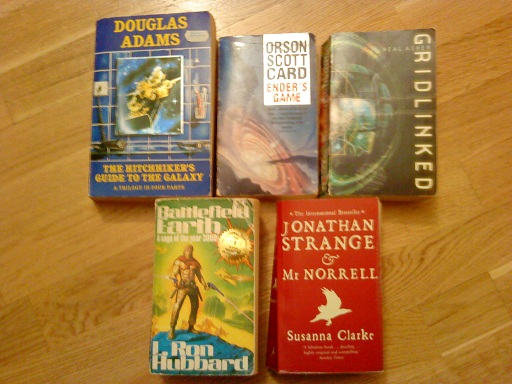
1) The Hitchhikers Guide to the Galaxy. Ironic, Witty, Hilarious, Genius. A book and a tale I have read and listenned to for many years wrote by a man who once shook my hand and made me very nearly find religion, though perhaps not the kind that Pope dude would enjoy! I have read the entire series so many times I cannot count the number and it is the #1 choice for me if stuck on a desert island.

2) Ender’s Game. Some love it, some hate it. I adore it and find the personalities and social ingenuity involved, brilliant. Like all the books here, it make my brain come alive and see IMAX in my head. I first read it fairly recently, Emma had it and I’d heard of it but never read it. Then I moved to her place and slowly worked my way around her bookcase and found, for me, and instant classic.

3) Gridlinked. Has to be that one. I love Cowl, I love The Skinner and the rest but to me Gridlinked is the best. It was my introduction to Neal and was right down my alley with its license to kill Agent Cormac. A thrill ride all the way with enough sub plots and twists to make me read over and over. This one I would read when I started to feel my first dose of apathy, to kick start me back into surviving.

4) Battlefield Earth. I know, I know, and I do not care. The author was a complete nut job, this is now certain. The writing isn’t even that good and is very simplistic and child like in parts but its one of the first ‘proper’ Sci-Fi books I read as I got older and I fucking love it. In my opinion only the Revelation Space series has come close to the epic scope of humanity this book offers. Everytime I read it my childhood comes back and I dream of Flash Gordon.

5) Jonathan Strange and Mr Norrell. The GF hates this book, with a passion, one that I cannot understand. In terms of writing this is, to me, the best book I have ever read. The alternate past in which it lives is one I dearly wish was the real one. I don’t tend to enjoy ‘fantasy’ books but then again I don’t rate this as fantasy. Its about magic, yes, but more than that, its about the Magicians and once I pick this up I cannot fail to read from the miniscule starts to the fatalistic ends of the key characters. My only regret is that Susanna Clarke seems to be a one hit wonder, but then again it means I don’t have to sneak another book onto the island!

I will say this. If ever stranded on an island with just these five books, I would survive, partly due to them. I would also be found crying at night over everything else I had to leave behind and missed, a lot of those tears would be over Clarke, Reynolds, Gaiman, Pratchett… Oh god, the list is endless.

/me waves to a passing ship and begs a look at the library.

Hitch.

Borders in Wellington

One here from Rob Clubley out of Borders in Wellington New Zealand. They’re still running? Here’s Rob’s blog and website.

Five years ago Caroline and I took a trip to New Zealand. We wandered around Christchurch to eventually find a book shop with a nice stack of my books. I signed them, and signed a wall in the shop covered with author signatures. I have to wonder if that wall is still standing.

5 Desert Island Reads — Rob Dalby

Hi Neal

It’s proved incredibly difficult to cut this down to five, and since two of the five would have been yours (The Skinner and The Technician) I decided to arbitrarily exclude your stuff in order to not look too much like I was blowing smoke up your you-know what..

Others bubbling under the top five would be David Brin’s Brightness Reef (representing it’s trilogy), The Illium and Olympos duet by Dan Simmons (as well as his The Terror which I think is Sci-Fi for reasons too complicated to go into here) and Chris Wooding’s Retribution Falls.

Anyway, on to the five.

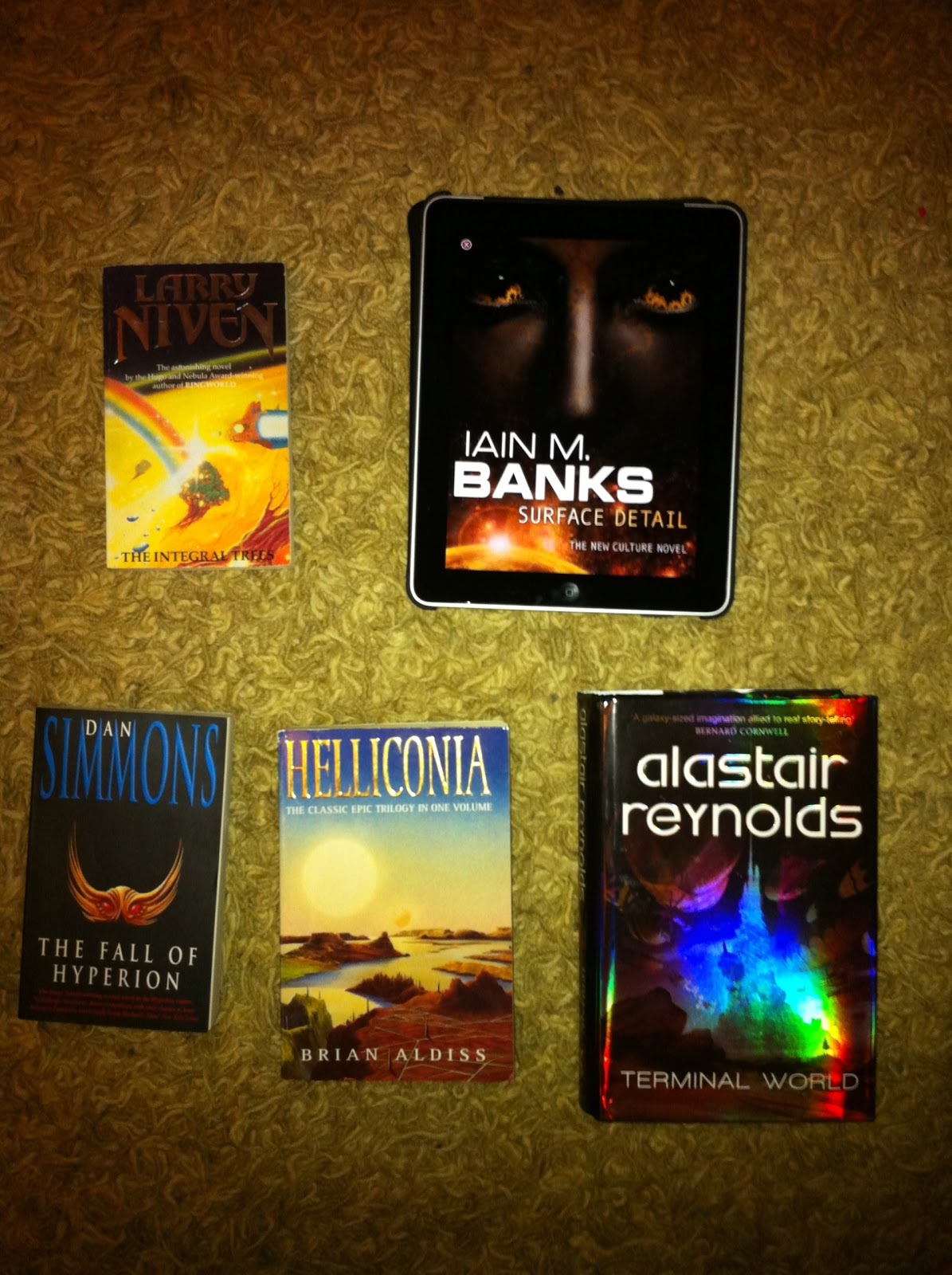
The Integral Trees by Larry Niven.
One of Larry’s lesser known works (along with it’s sequel The Smoke Ring) and from the period when he was arguably past his best, but for me the story of Sharls Davis Kendy, Checker of the starship Discipline, keeping his ancient watching brief shows that Niven’s huge imagination was still as fertile as ever, with it’s description of a long-lost society of humans growing up among the bizarre vegetation and creatures of a gas torus.

The Fall of Hyperion by Dan Simmons
To some extent this is representing it’s three siblings (Hyperion, Endymion and The Rise of Endymion) but this one is my favourite of the four. Simmons has a remarkable talent in creating an entire , fully realised, civilisation within a single novel where others might take a whole sequence to get to the same amount of detail, and the world of the Hegemony of Man is one which we would love to live in, at least until we find there is a worm buried in the apple. It’s crammed with breath-taking vignettes, and I’ve been haunted by the final choice of Hegemony CEO Meina Gladstone since I first read the book getting on for 20 years ago.

Helliconia by Brian Aldiss
Perhaps cheating a little here, but my version of The Grand Old Man of British Sci-fi’s best work has all three volumes of the Heliconia cycle in one book, so I am having it as one of my five. There is a wonderful sense of momentum – the slow tumbling cycle of history, in the complex dance of the two stars of the Heliconia system and the effects the resulting centuries-long seasons have on the fortunes of the two sentient species of the world. There are discomforting parallels (for me) between the way our society seems to be developing and the parallel story of the deteriorating Human mission to Heliconia observing the planet below from their space station.

Terminal World by Alastair Reynolds
For me the mark of great Sci-FI is to create so compelling a world that as soon as you put down the book you want to know what happens next – want to go back there. I’d hate to think that Reynolds might not revisit the remarkable society of the Terminal World, which he leaves with many questions unanswered. Much of the pleasure in the book comes from following the clues Reynolds leaves as to the real nature of the world he is describing.

Surface Detail by Iain M Banks
A return to form for Banks, whose sci-fi output has been (for me at least) disappointing of late. I read it in one sitting while crossing the Atlantic in a B747, and the wonderful twist at the end, dropped in so gently it feels like an afterthought, more than made up for the six hour delay in leaving London. It’s always great to visit the Culture (another society we’d surely love to live in – and for me a sort of mirror image of the Polity) and Banks has excelled in creating another in his long line of memorable villains and slightly punchable sort-of-heroes.

Anyway, that’s the top five, at least for today. Probably be completely different by tomorrow

Best

Rob

Publishing a Kindle Book

Well, I’ve taken a little look at it all. Initially it seemed that the 70% rate was a load of bollocks because when searching you mostly come up with 35%. However, further searches (thanks Geoff Lynas) reveal that there is a 70% rate for certain regions, and most importantly for me they are UK, USA and Canada. It’s also the case that there is a ‘shipping charge’ of $0.15 X number of megabytes and a 15% VAT rate (though when and where that’s applied I’m not sure).

Another thing putting me off was finding pages with all sorts of instructions about loading the books in HTML or plain text but, on checking, I found that the Word ‘doc’ format is supported. Just to check all this out I signed up (here) with my Amazon ID and finding that there’s a ‘draft’ setting I loaded up my novella The Parasite and, sure enough, I can take a look at how it will look on a Kindle and it’s fine.

The only drawback here for me is that this is all (please correct me if I’m wrong) on Amazon.com and, because its US, any payments I get will have to be by cheque rather than direct to my bank account. Then again, if the cheques turn up promptly I’ve no problem. I do wonder what the minimum amount is before a cheque can be sent.

Okay, I am now going to rework The Parasite and give it a go. When it’s up for sale I’ll let you know how it all goes.