So, throwing a spacecraft at the Asteroid Belt, with the asteroids on average being a million kilometres apart, your chances of hitting one are not exactly high, which is why the spacecraft we have sent out that way got through unscathed. However, what is an asteroid? From what I can gather they are the objects we can see through our telescopes and have counted. Beyond that the number is estimated and estimations vary widely. I also have to wonder what we can see. I’m guessing that objects the size of a football or a pea aren’t picked up. The chances of something the size of the Pioneer or Voyager craft hitting one of these was probably negligible, but they’d certainly have to be taken into account if you’re presenting a profile 5 kilometres across and travelling at 20,000 kilometres per hour.
Category: Articles
Aftermath — Peter Robinson.
st1:*{behavior:url(#ieooui) }
Being an incorrigible book snaffler at Macmillan I’ve managed to aquire lots of reading matter and it’s not all SFF, as you may have noticed by many of my past reviews. I do seem to be developing a bit of a detective fiction habit. If I can grab a copy of a new book by Minette Walters I will, also Peter James and Peter Robinson. The Inspector Banks book by the last of these I’ve been reading and enjoying, but only in the same way as with Peter James, that is, I need a bit of a break between books to go away and read something else – detective books, set in the same location with the same characters do get a bit samey, a bit formulaic. That aside, they’re still good and I still enjoy them.

So, I had mixed feelings when I found out that there was to be an ITV production of Peter Robinson’s Aftermath with Stephen Tomkinson as DCI Banks. On the one hand I was really glad to see that it was being done with such a heavyweight actor in the lead role, on the other hand I was pissed off because, being in Crete, I probably wouldn’t get to see it until it was out on DVD.
When we got back here I was happy to discover that Caroline’s father had overcome his previous problems in dealing with a DVD recorder and managed to record the two episodes for us. Last night we sat down and watched them and, what can I say, it was great. It had Morse-like camera work, Tomkinson was excellent in the role of the permanently haunted Banks and all the other production values spot on. Damn but I hope this is a success. If it is we could be seeing the start of something just like Morse, or Frost, or Dalgliesh, or Wexford, because there are enough of Peter Robinson’s DCI Banks books to fill up a couple of feet of shelf space. Fingers crossed.
Printers
I’ve finally given up on the ink jet printer. These things are fine if you’re using them steadily, but if you’re living in two countries and therefore leaving your printer alone for seven months, it ain’t so good. I tried the technique of sealing the cartridges in a plastic bag, but they’ve dried up. Time I think to put away the bottles of ink and the syringe, and time to stop having to bleach ink off my fingers.
The best printer I ever had was an Oki monochrome laser, zero problems with it until the image drum reached the end of its long life. But I wanted colour and, last I recollected, colour laser printers were bloody expensive. Not the case now, so I’ve ordered a Samsung CLP-325 colour laser printer.
The First World War from Above
After some quite good TV yesterday, including ‘Stand by Me’ which was a faithful adaptation of the excellent Stephen King novella – an uplifting story completely without the supernatural and whose only horror was the kind we all face or will face – and the Antiques Roadshow, we finally got to what we were really looking forward to.
The First World War from Above presented by Fergal Keane ‘examines recently discovered footage and photographs of the conflict. A 48 minute film of the conflict taken by a French airship in the summer of 1919…’. We saw probably ten minutes of that footage and just a few of the photographs, but they were enough. You didn’t need to see a full 48 minutes of towns turned to rubble, and a Moon-like landscape jagged with trenches like cracks in egg-shell. The program was still excellent and still provided a new perspective on that war, for example, German’s giving away the position of their camouflaged barracks by making flower gardens, and paying the price.
The bit that really captured my attention was one aspect of this war I knew nothing about until I read Sebastian Faulks’ book Birdsong: the tunneling war and the planting of mines. During the battle of Messines 19 mines were detonated underneath the Germans. Each of these (I think) consisted of 450 tons of explosive and not only changed the course of the war but the shape of the land. Later pictures showed neat round lakes in the Belgian countryside, surrounded by nice little copses of trees – lakes that are basically graves (like so much of that countryside) but where the only human remains to be found are pieces of bone no bigger than a fingernail.

And on a side note: I now have a better understanding of the destructive power of explosions measured in kilotonnes (since ton and tonne are roughly equivalent). These were about half a kilotonne.
In total 21 mines were laid but two of them were not used, and the British then lost their location. One of them was detonated in 1955 by a lightning strike on a nearby pylon, but wrecking the surrounding area but killing only one cow, whilst the other still hasn’t been found.

As well as the aerial footage, some of the usual black-and-white film was shown in this: the guns firing, the men going over the top and a particular clip of a soldier carrying his wounded comrade out of a trench. All of these were immediately familiar since, before we came back to Britain, our TV viewing over a few days consisted entirely of The Great War. This series was first broadcast in 1964, narrated by Michael Redgrave, and is still well worth watching. Really, if you haven’t seen it, I suggest you do.
Update: I stand corrected. It was a total of 450 tons of explosives distributed to make 19 (or quite possible 21) mines under the German lines. This means they weight in at between 20 and 25 tons each and, as I noted in comments, was enough to shake the teacups in Downing Street. Then again, all of them went off within seconds of each other. Anyway, this brings me to the conclusion that a half kilotonne explosion would be enough to excavate Hanningfield reservoir, not the village duck pond.
Good Reads
While surfing the Internet I just came across this at goodreads. All very gratifying with a star rating about the same as Amazon but divided over more reviews. I seem to weigh in at about four stars generally.
The Departure
Remember my previous post about the Asteroid Belt? Well I’ve just finished going through the copy edited typescript and my perceived error required and addition of five words, and they weren’t really needed.

Really, my screw-up was in the book Zero Point, which I haven’t even finished. In The Departure I mention the Asteroid Belt a total of about three times. Now time to get back to some research on a vaguely remembered figure of eight route between Earth and Mars…
Note to self: do not turn into a histrionic writer!
VSS Enterprise Completes First Manned Glide Flight
I signed up quite a while ago for news updates from Virgin Galactic, which have been interesting but infrequent. Two I received while in Crete I really should have mentioned here, but a lot of other stuff was going on and I didn’t get round to it. Now I will.
VIRGIN GALACTIC’S SPACESHIPTWO ACHIEVES MAJOR MILESTONE IN ITS PROGRAM TO BECOME WORLD’S FIRST MANNED COMMERCIAL SPACE VEHICLE.
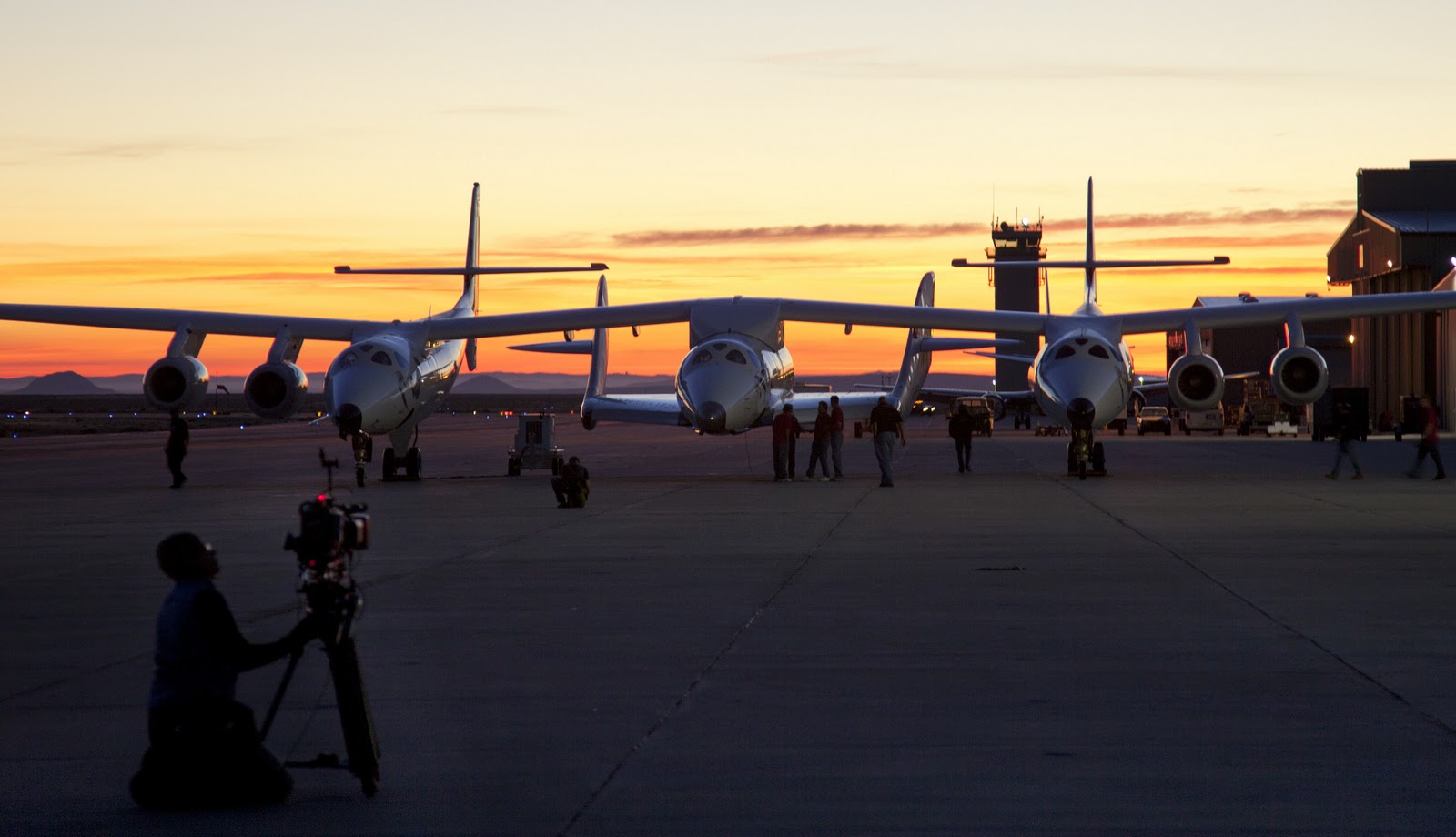
While most of the media of the world concerns itself with a sick economy, various apparently pointless wars, and a mid-term president who seems to be losing his grip, it’s heartening to know that this project is on course and doing well.
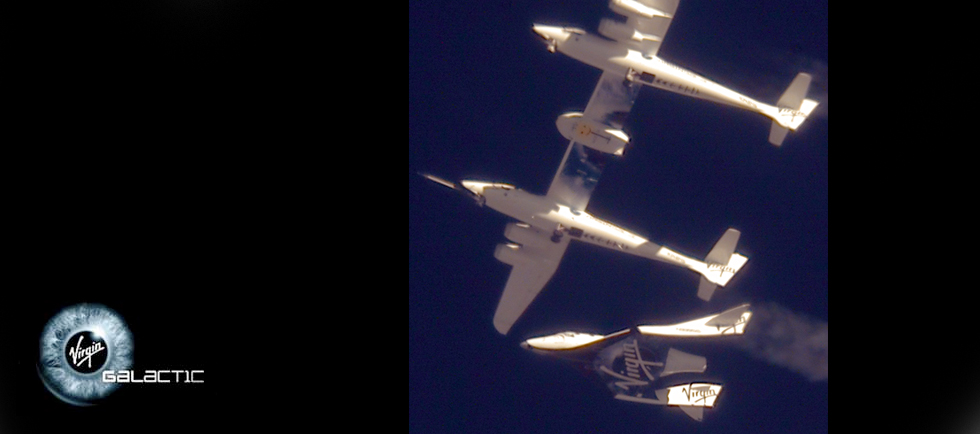
VSS Enterprise achieves manned free flight from over 45,000 ft (13,700 metres) and successfully glides to land at Mojave Air and Spaceport.10th October 2010, Mojave, CA. Virgin Galactic, the US company developing the world’s first commercial manned space flight system and tourism business, is delighted to announce the successful completion today of the first piloted free flight of SpaceShipTwo, named the VSS Enterprise. The spaceship was released from its mothership at an altitude of 45,000 ft (13,700 metres).
Reading that last bit I can’t help but wonder about reality catching up with fiction, and the way that science fiction can be swiftly put out of date. Isn’t there a scene in one of the Star Trek Films where one of the Enterprise captains (Picard?) shows off a display case full of models of ships called Enterprise? It strikes me that now that display is short one model.
During its first flight the spaceship was piloted by Pete Siebold, assisted by Mike Alsbury as co-pilot. The two main goals of the flight were to carry out a clean release of the spaceship from its mothership and for the pilots to free fly and glide back and land at Mojave Air and Space Port in California.
Sir Richard Branson, founder of Virgin Group, who was present during the first successful flight, added “This was one of the most exciting days in the whole history of Virgin. For the first time since we seriously began the project in 2004, I watched the world’s first manned commercial spaceship landing on the runway at Mojave Air and Space Port and it was a great moment. Now, the sky is no longer the limit and we will begin the process of pushing beyond to the final frontier of space itself over the next year.”

Good on you Mr Branson, it’s excellent to know that someone with money and power shares the dream. However, bringing things thumping back down to Earth, much as I admire what you’re doing, I’m still comparing that BT broadband offer against what I pay for my Virgin account…
Top 10 SFF on Amazon UK for 2010
Obviously I rather like this particular top ten especially when you consider that The Technician didn’t come out until August and was a hardback. I am however a little puzzled. Did I sleep through Christmas and the New Year?
Computer
Back in the Land of the Jobsworth
And so, we got up at 5.00AM Greek time, left home at 6.30 to get to Iraklion airport at about 9.00. After the usual waiting around and buggering about a thirty-five minute flight took us to Athens airport where we had to wait around for nearly seven hours for our flight to Heathrow. This was sort of okay, since there were places to eat and drink (though €3.50 for a bottle of coke is outrageous) and we could pop outside the airport for a cigarette.
At Heathrow the numerous No Smoking signs started to, as always, annoy me. Then some officious prick in passport control telling us to remove any covers from our passports annoyed me further. However, the swift arrival of our luggage – first off the conveyor – allowed me to calm down. It wasn’t till we were heading out to catch our cab that my ire started to rise again. There’s not only No Smoking inside the airport, but outside too, even in the multistory parking area.
Now we wouldn’t want any second-hand cigarette smoke there to spoil the aroma of the exhaust fumes from the endless queues of taxis and buses filing across in front of Arrivals, or of the fumes from the cars cramming through the car park, not to mention the fumes from the one plane every ten minutes that takes off from Heathrow, would we?
No Smoking in the taxi too, yeah, okay, it’s not my car. But and those stickers everywhere and a big ‘Thank You For Not Smoking’ plastered across the dashboard?
Fuck off.