I picked up this Neil Gaiman clip via an SF Signal twitter. Rather similar to an earlier speculation of mine that book piracy might be an electronic version of the second-hand book shop. I’m not entirely sure I agree. Does this apply outside SF? How does it apply for lesser known authors? How does it apply to authors who aren’t regularly publishing books?
Category: Articles
The Skinner from Audible
Recording at Audible
So, yesterday we took the 11.05 train from Althorne to Wickford then went from there to Liverpool Street. Whilst we were travelling I kept adjusting my short introduction to the Spatterjay novels and was looking over the lists of questions I’d put together for this interview/conversation with William Gaminara. The questions for him to ask me I’d taken from various interviews I’ve had, whilst those for him to answer were from the surprising lack of information about him on the Internet. I’m guessing that despite being a well-known actor in Britain he’s probably a very private individual.
As it was I had even less time to fret. Initially we’d agreed to meet Stacy Patton Anderson (Acquisitions Manager for Audible) for lunch near Liverpool Street, whereupon we were going to go for a wander about, then head at 5.00 to the studio being used for the recordings. However, it turned out that Mr Gaminara was going for an audition (he still has to audition?) so the recording time was moved to 3.00.
We met Stacy, a pleasant American lady, in ‘Canteen’ in Spitalfields at 1.00. This seemed to be a slightly trendy place i.e. it had acoustics that severely hampered conversation, communal tables, uncomfortable backless chairs and expensive but average food. I’d brought along a selection of books for her that I handed over, and then, after eating, she took a further look at my intro and suggested some changes, which we made. After that we took a tube to Edgeware Road whereupon Stacy tracked down the Lisson Street studio with some sort of app on her phone.
Approaching the glass doors we immediately recognized Mr Gaminara inside – it’s that thing about actors: you recognize them like people you’ve known for years, but of course you don’t know them at all. On about three occasions whilst in London I’ve turned to say hello to someone I know, then stopped myself because I only knew that person as Inspector Burden from Wexford, Neil from the Young Ones or Prunella Scales from Fawlty Towers. You feel such a fool but, of course, they are used to it, and are immediately aware that they’ve been clocked.
I said hello to William, thanked him for his reading of my books, said hello to Vicky Bennett (Assistant Producer) and the sound editor John Moreland, whereupon we all trooped upstairs to the studio and generally had a chat. Apparently William hadn’t read any SF since Asimov many years ago. Still, I handed over some books – if not to lure him in then hopefully so he can start thinking about how he would read the Cormac series! Anyway, he seemed like a nice guy: professional and intelligent, paying attention to everyone around him and not in the least egotistical.
Just a note here: funny how though the people in the studio kept referring to him as ‘Willy’ I can’t bring myself to use that name here. Just goes to show how, maybe unconsciously, we so associate the actors with the roles they play. Damn it, he’s not Professor Leo Dalton!

We both went into the recording room which was a bit like a radio studio with spectators, producer and sound guy on the other side of a viewing window (In the picture Gaminara is the guy with only one chin and a face undamaged by acne rosacea). Whilst they were sorting out the sound levels I tried one of my questions to him and immediately made a cock-up, saying he’d written the scripts for The Lakes, and being corrected by him. In fact the series was created by and mostly written by Jimmy McGovern, with co-writers of some episodes being William Gaminara and others. Shows you how you can go wrong on the Internet.
When we got into the interview/conversation we hardly referenced the questions at all. Vicky Bennett occasionally asked us to focus on this and that and, at one point, according to Caroline, gave up because she couldn’t get a word in edgewise. Afterwards I was told it all went well, but I always take that with a pinch of salt nowadays. William then went off to do his audition – and will be back in the studio recording the audio version of the John Christopher Tripods series today. It might be interesting to get hold of that since, as I recollect, the TV version was never completed. Stacy also went off to some sort of meeting. In both cases, because studio time was limited and they wanted me in to record the intro, I forgot to sign their books. I went through the intro, repeating the bits I screwed up so it could be edited together later. As I stepped out it amused me to hear Vicky say (the first time anyone has said this to me in my life), ‘That’s a wrap’.
Leaving the studio we wandered around for a bit looking for somewhere to get a drink – I was wired – then got fed up with that and headed home. Caroline immediately brought me down to earth by getting me to take the rubbish out, then I made a dent in a bottle of Edradour I got for my birthday whilst we watched Taggart and some more episodes of The Shield.
Interesting interlude, but now back to the day job.
W & Y for Wolfe and Warrington Mostly.
I just remembered that I haven’t finished putting all of my collection up here…
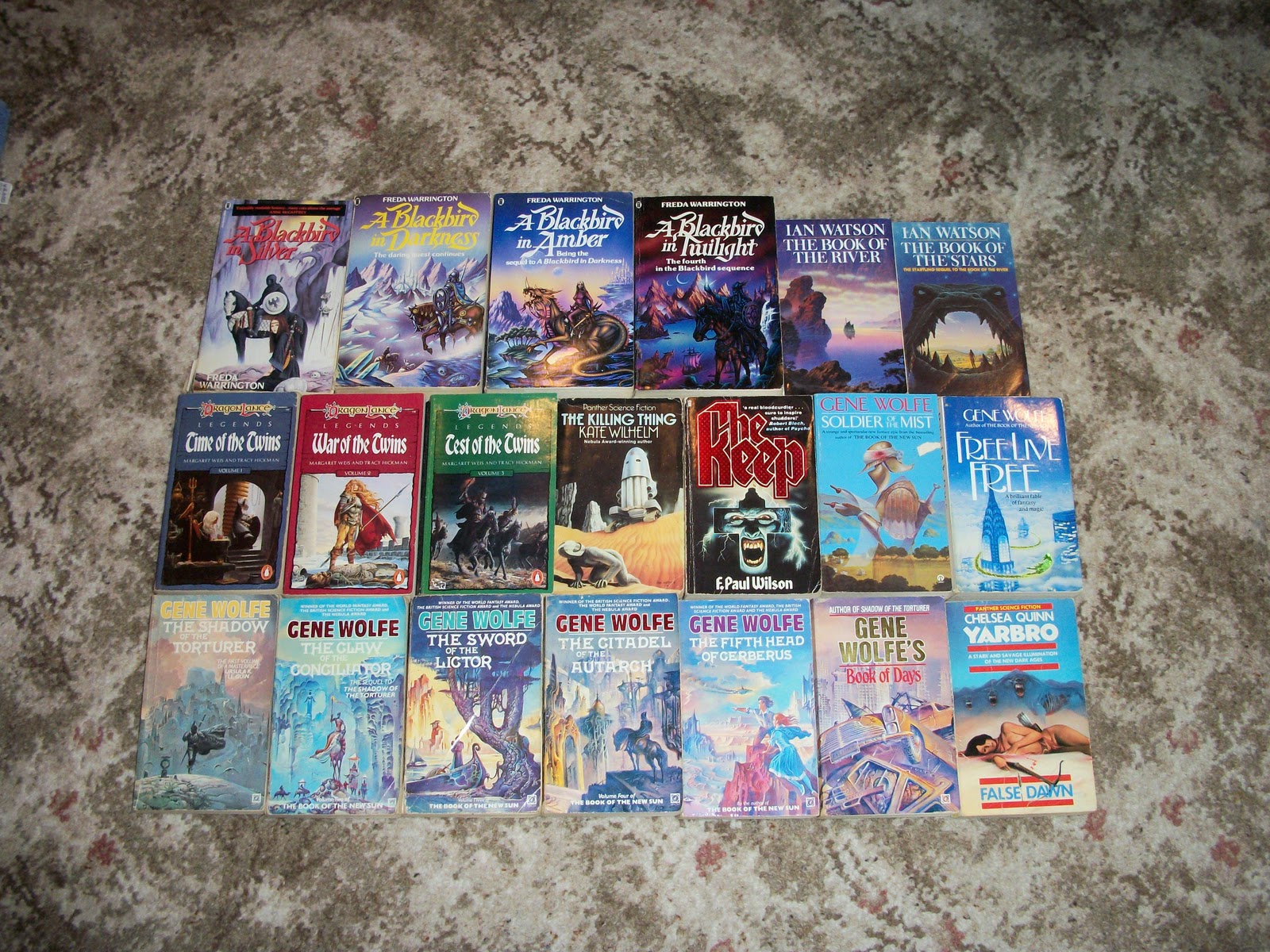
FREDA WARRINGTON:
THE BLACKBIRD IN SILVER
THE BLACKBIRD IN DARKNESS
THE BLACKBIRD IN AMBER
THE BLACKBIRD IN DARKNESS
IAN WATSON:
THE BOOK OF THE RIVER
THE BOOK OF THE STARS
WEISS & HICKMAN:
TIME OF THE TWINS
WAR OF THE TWINS
TEST OF THE TWINS
KATE WILHELM:
THE KILLING THING
F. PAUL WILSON:
THE KEEP
GENE WOLFE:
SOLDIER IN THE MIST
FREE LIVE FREE
THE SHADOW OF THE TORTURER
THE CLAW OF THE CONCILIATOR
THE SWORD OF THE LICTOR
THE CITADEL OF THE AUTARCH
THE FIFTH HEAD OF CERBERUS
BOOK OF DAYS
CHELSEA QUINN YARBRO:
FALSE DAWN
Patrick Moore Interview on The Register.
Thanks, Shiraz, for directing me to this excellent interview with Patrick Moore — one of the founders of Greenpeace.
Particular highlights:
We’re in an interglacial, but we’re in a longer-term Ice Age. If we look at local temperatures, we’re still in an Ice Age. It’s 14.5°C , peak 12°C, but in the greenhouse period ice ages are short and sharp; Greenhouse Ages are long and steady and last 10 million or 100 million years. The Earth’s averaged 22°C in these periods. So when people say global temperature is going to go up 2°C, and we’re going to die, I just laugh. We’re a tropical species. We haven’t adapted to cold and ice, except we have fires.
For example, the latest scare is ocean acidification – it’s totally made-up and ridiculous. Tomato growers inject CO2 to make the tomatoes grow; salt water aquarists inject CO2 to increase photosynthesis; and yet with coral we’re told the opposite is true.
Apocalyptic scenarios are just that – our fear of death. When you add self-loathing, and you have the apocalypse being externalised, this is what you get. We have to stop this self-defeating approach: that – “we’re going to die and we’re to blame”. That is enough to make you sick to your stomach. Much of this is collective neurosis. We should celebrate life.
Bit of Recording.
Righto, giving me less time to fret about the matter it seems I’m going into London tomorrow to record a little introduction for the Spatterjay books for Audible, then have some sort of recorded informal interview/chat with William Gaminara.
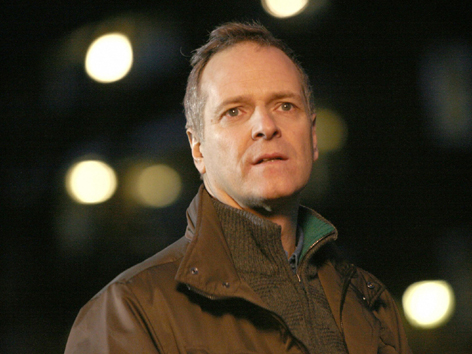
This has come up rather unexpectedly because Mr Gaminara is at Audible recording the Tripod books (John Christopher). I guess it’s useful for me because it gives me less time to fret.

Outcasts (Yawn)

Well, I watched the first episode of Outcasts and I’m finding it difficult to summon up the will to make a coherent criticism of it, but I will strive to do so. It was dreadful and dull. I was reminded of some of the dry history tomes I’ve tried reading. In the past I’ve really wanted to find out more about the Roman Empire, the Aztecs, the Saxon Kings whatever, and on just about every occasion I’ve been defeated by how the historian concerned managed to turn an exciting and interesting subject into something as dry as dust. Here in Outcasts we have the colonization of a new world, the landing of an interstellar spacecraft, intrigue, murder, weird things in the woods, and it grabbed me about as tightly as a dead octopus.
The sets were dull, the clothing is dull, the story is dull, the extrapolation is dull etc.
But I guess those history books were different. Boring they might have been but they never made me cringe.
But why was it so bad? It spent far too much time having people emoting and sobbing at their computer screens; it spent far too much time ‘character building’ but not in a good way; it is obviously getting wrapped up in right-on human issues, man. The entire plot can be summed up as: having a bad time, latest spacecraft crashes. And it was obviously another spacecraft coming direct from planet North London.
Oh yeah, and apparently they’re on a world with a breathable atmosphere where parallel evolution has produced pine trees and grass. Apparently Earth has been rendered uninhabitable, though meanwhile they managed to put together an interstellar space drive and colony ships.
Nice replacement here for the awful Survivors, and it’ll probably get dumped just as quickly.
Ach! I give up.
Line War Review — Walker of Worlds
Mark Chitty finally got to the last in the Cormac series:
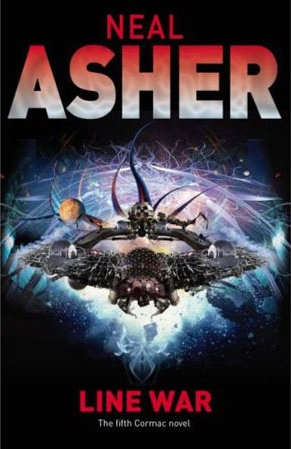
Finally I’ve come to the last Agent Cormac book, Line War, and up to now it’s been a ride of ups and downs. The first two books, Gridlinked and The Line of Polity, were rather enjoyable, but they did have their issues. After that came Brass Man and Polity Agent, both of which upped the stakes and delivered some really great sci-fi. Now with Line War the story comes to a conclusion, and while it ends the series as a whole I always had that niggle of a doubt in my mind that it might not be as spectacular as I hoped. All totally unfounded of course, as Line War not only closes the series in style, it is one of the best books I’ve read in quite a while.
Line war on Amazon and on the Book depository.
Update (I just have to add his summing up):
On a final note, the Cormac series is perhaps one of the best overall examples of sci-fi I’ve had the pleasure to read. It’s got action, adventure, intrigue, alien menaces and a whole host of other things that just hit the spot for me as a reader. Neal Asher: without a doubt the most entertaining science fiction author writing today. Well done, sir!
10/10